Where these patterns come from, what they were once for, and why a finished carpet is so difficult to look away from.
A carpet is the slowest art there is. A fine one holds well over a million knots — and a weaver, working steadily, ties perhaps six to ten thousand of them in a day. Months pass. Often years. The Ardabil Carpet, finished in 1539, carries some twenty-six million knots; it took about ten weavers roughly four years to complete.
Every knot is a small and final decision — this colour, this place, now — and there is no quiet way to undo one. So what you stand on is not a picture of a thing. It is the record of a human being's attention: a season of a life, sometimes a great deal more, held still in silk and wool and never set down.
No one person designed these patterns. A motif was drawn, and woven, and half-remembered, and woven again — carried from a mother to her daughter, from a court workshop to a village loom, copied and adjusted and quietly refined by hundreds of hands across five centuries. What reaches you on a carpet today is the survivor of all of that.
Some of it began, unexpectedly, in a library. The medallion at the centre of a classical carpet is widely held by scholars to have migrated from the art of the book — the tooled covers and illuminated pages of manuscripts, drawn in the same royal studios, then squared onto a grid and handed to the loom. But the library was only the first hand. Every loom the design passed through afterward left its mark on it. A carpet pattern is, quietly, the longest collaboration in the history of art.
Ask what a carpet is for, beyond the floor, and the oldest answer is: a garden. In the dry lands where these rugs were made, a walled, watered garden in full bloom was the very image of paradise — and that is no metaphor. The word paradise descends from the Old Persian pairidaeza, a walled garden. A flowering carpet is that garden made portable: a perpetual spring you can roll up, carry, and unroll on any floor, in any season.
Some carpets are also instruments of prayer. The pointed niche of a prayer rug is laid toward Mecca; the lamp often woven within it echoes the Qur'an's Verse of Light — God's light likened to a lamp within a niche. To make such a thing as beautiful as a pair of hands could manage was itself an act of devotion. God is beautiful, runs a saying of the Prophet, and He loves beauty.
Now and then a weaver knotted words themselves into the field. The greatest of all carpets — the Ardabil, finished in 1539 — carries a couplet by the poet Hafiz and the maker's own signed line: the work of a servant of the court, Maqsud of Kashan. Five centuries on, the verse still speaks out of the wool.
“I have no refuge in the world other than thy threshold; my head has no resting-place other than this doorway.”Woven into the Ardabil Carpet, 1539
We tell that story because it is true — and we will not tell you the other one. The “Ode to a Garden Carpet,” quoted across the rug trade as ancient Persian verse, was in fact written in the twentieth century by the scholar who first printed it. It is a lovely poem; it is simply not what it claims to be. A real voice, five hundred years old, is worth more than a beautiful invention.
Stand before a good carpet and the eye will not settle. The field has no edge — it repeats outward, and the border frames it like a window onto a garden that continues past sight. Saturated colours shimmer faintly where they meet; in a densely drawn field the eye cannot fix what is flower and what is ground, and flips quietly between them. It holds you — and yet it rests you, the way firelight does.
There is a reason that runs deeper than taste. A carpet's dense, repeating pattern engages the same circuitry of the visual cortex that, studied in other states, generates geometric form. These patterns were tuned — across those same five centuries, by eyes watching what other eyes were drawn to — to the architecture of human sight itself. A carpet is not only made by human attention. It is made to meet it.
The collection runs across seven motif families. Each carries its own origin — and its own honest reading.
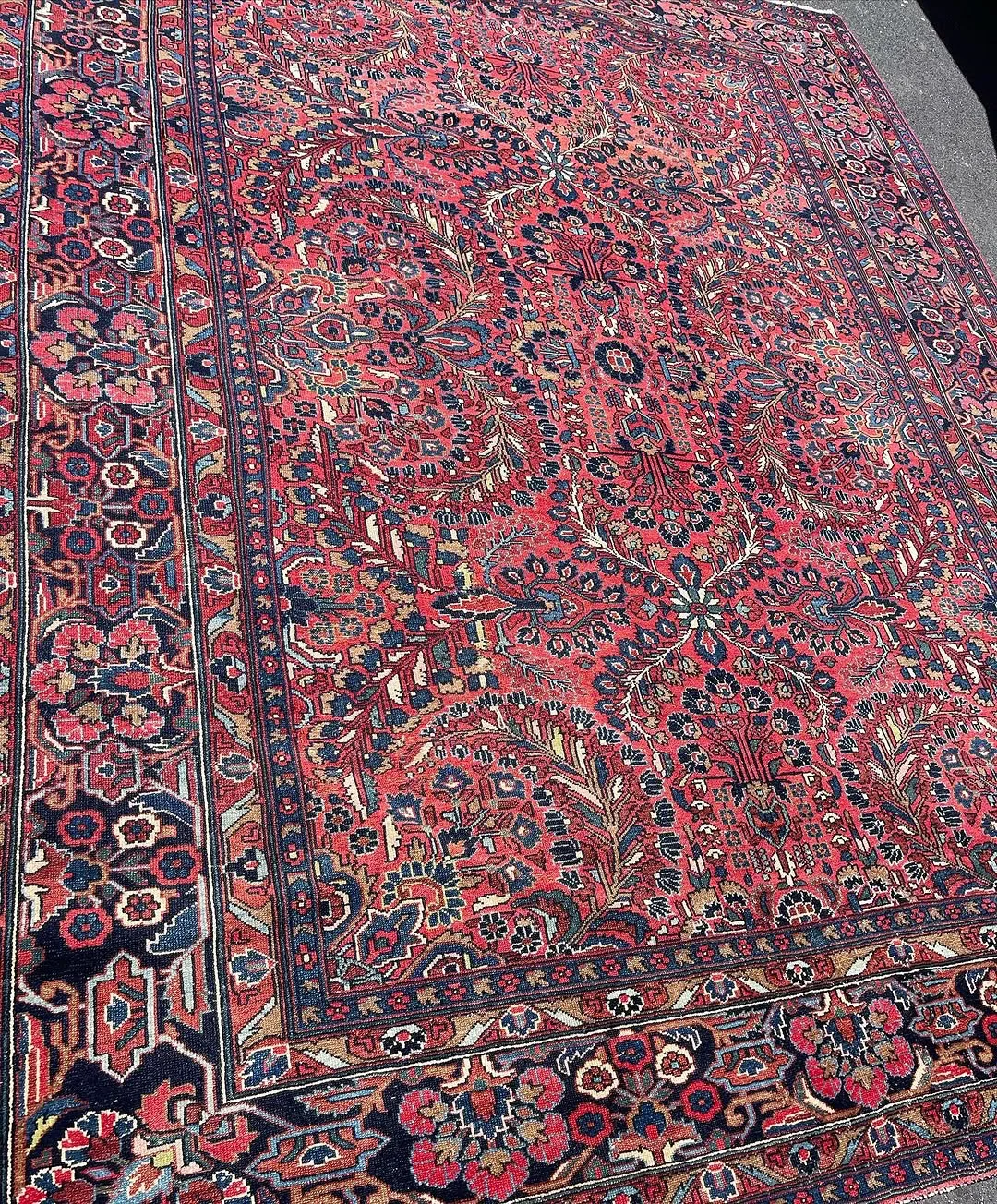
Woven in Persian villages — a freehand reading of the royal court's floral vocabulary, in dense blossoms and detached sprays. Many such carpets reached America through the early twentieth-century trade.
A flowering field, traditionally read as the paradise garden — an eternal spring kept underfoot.
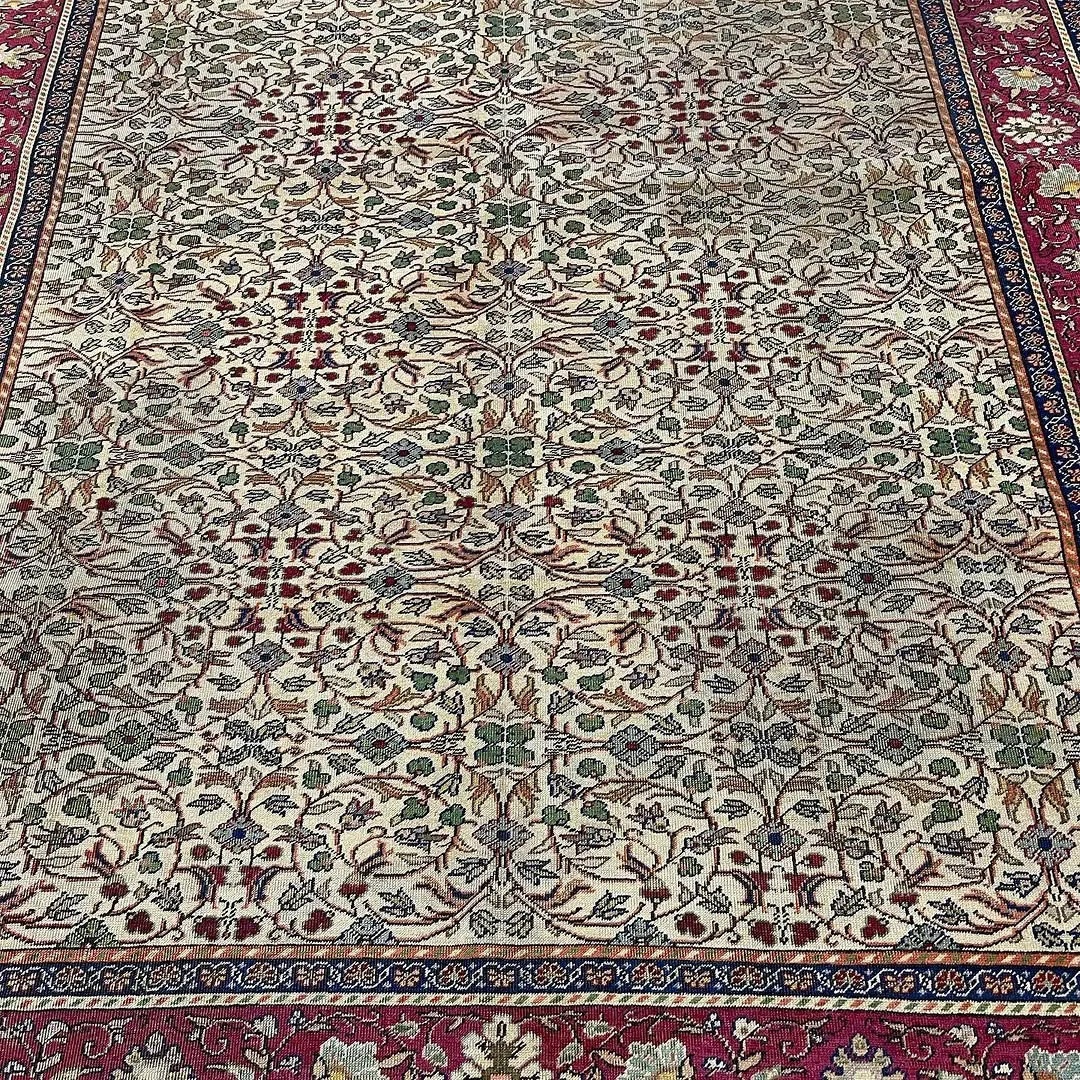
The court tradition at its most refined — a curvilinear lattice of vines and palmettes, knotted at high density so the curve itself can flow.
A cultivated, ordered garden; traditionally read as the image of a whole world in bloom.
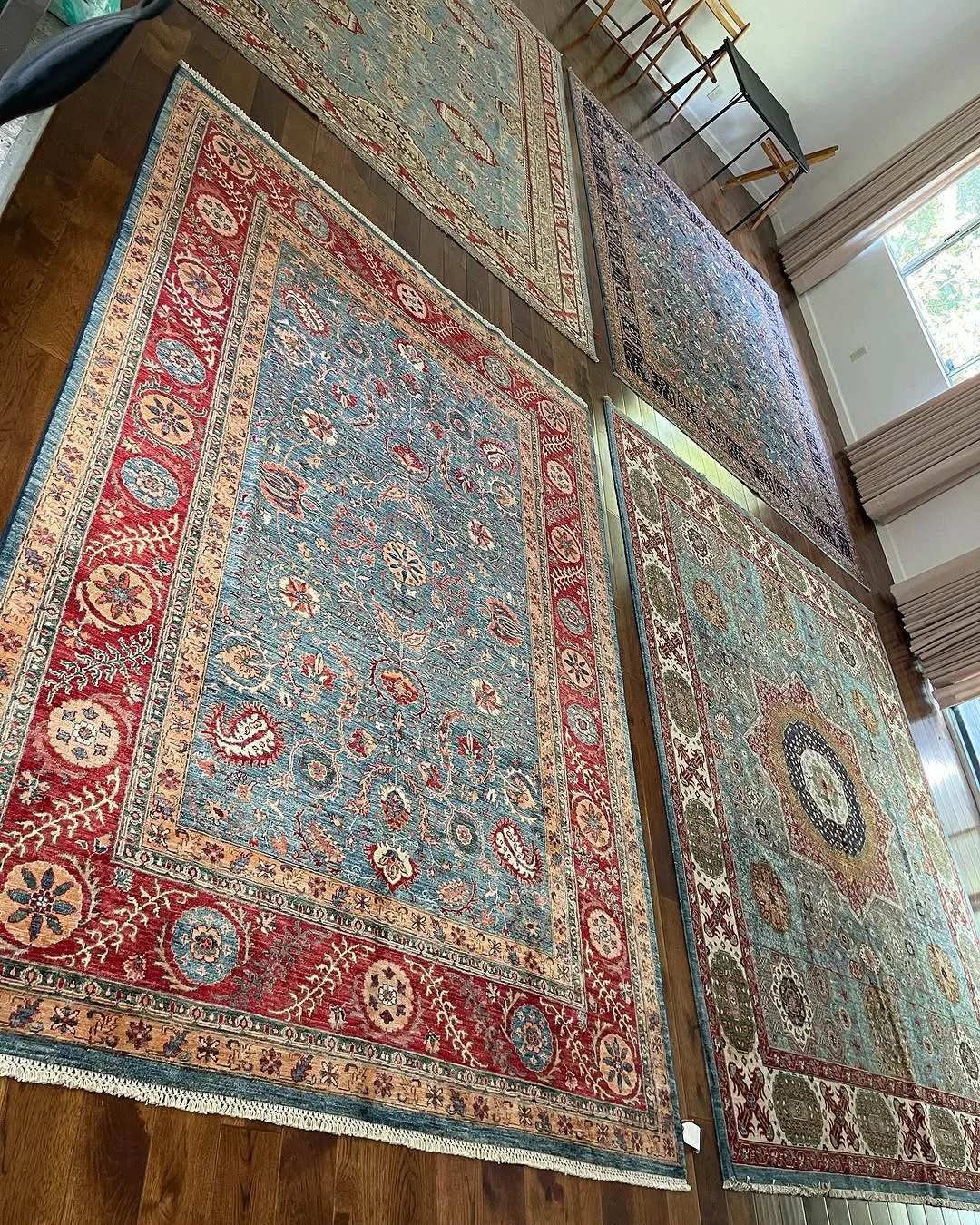
Highland village weaving — court motifs rebuilt from memory, without a paper cartoon, into bold stepped medallions, hooks and stars.
Expressive community geometry; emblems that traditionally carried identity and protective intent.
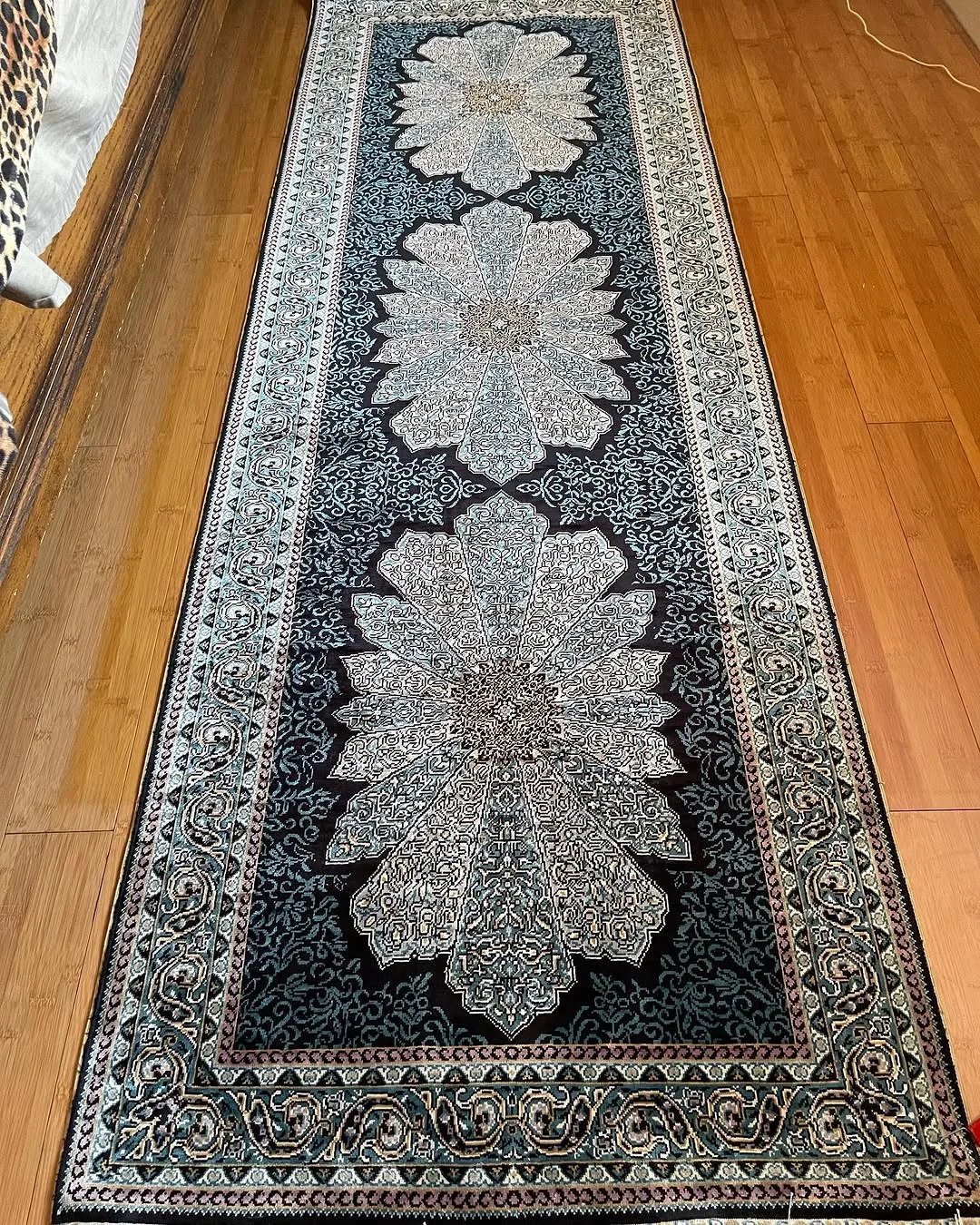
A central medallion — a form that migrated into carpets from Islamic bookbinding — knotted in fine, light-catching silk.
The medallion as the still heart of the field. In silk, its light and shadow trade places as you move around it.
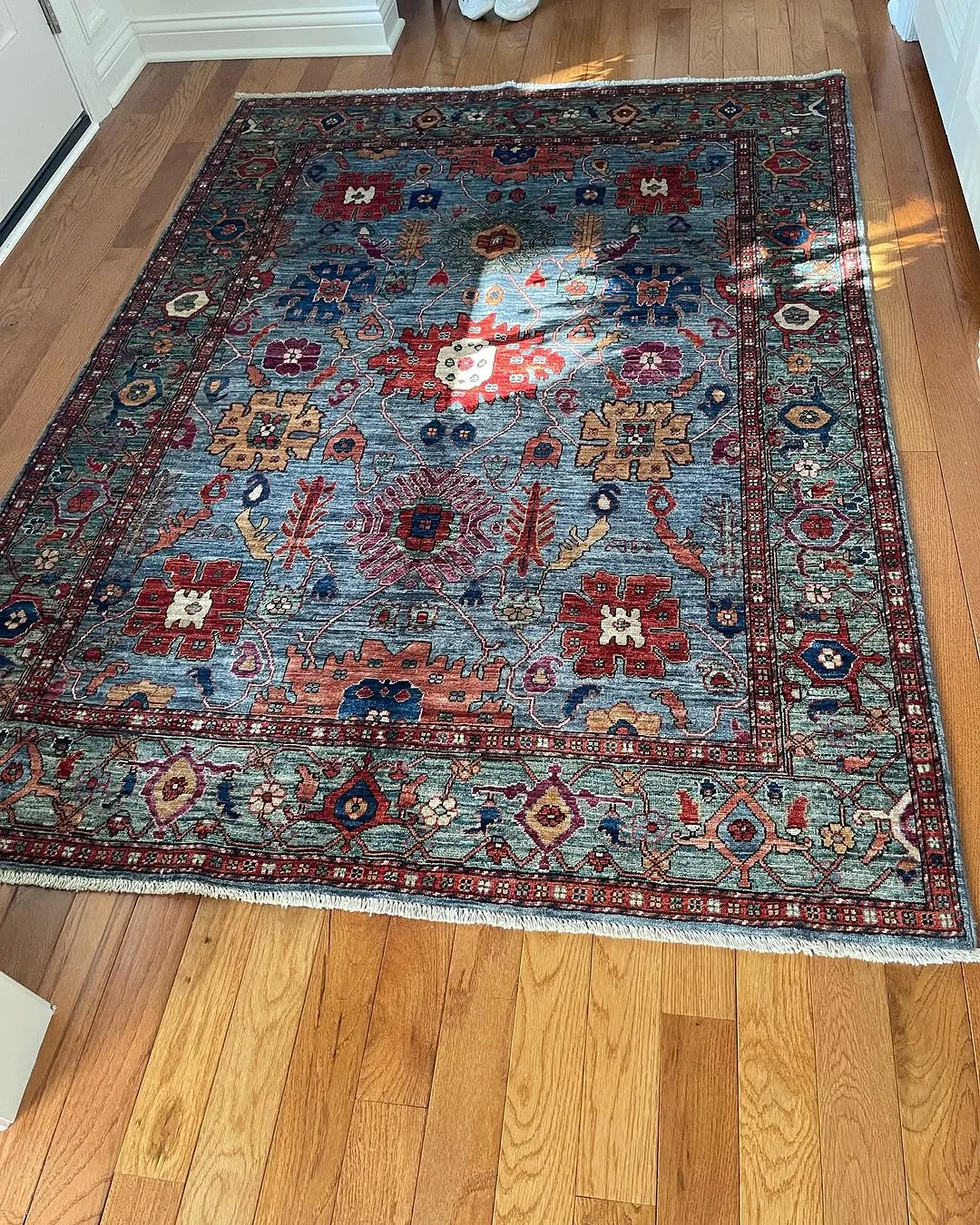
Tribal and revival weaving — large-scale geometric fields, latch-hooks and palmettes, in the line of the nineteenth-century Sultanabad workshops.
Tribal identity and protective intent, carried forward as living tradition rather than a fixed code.
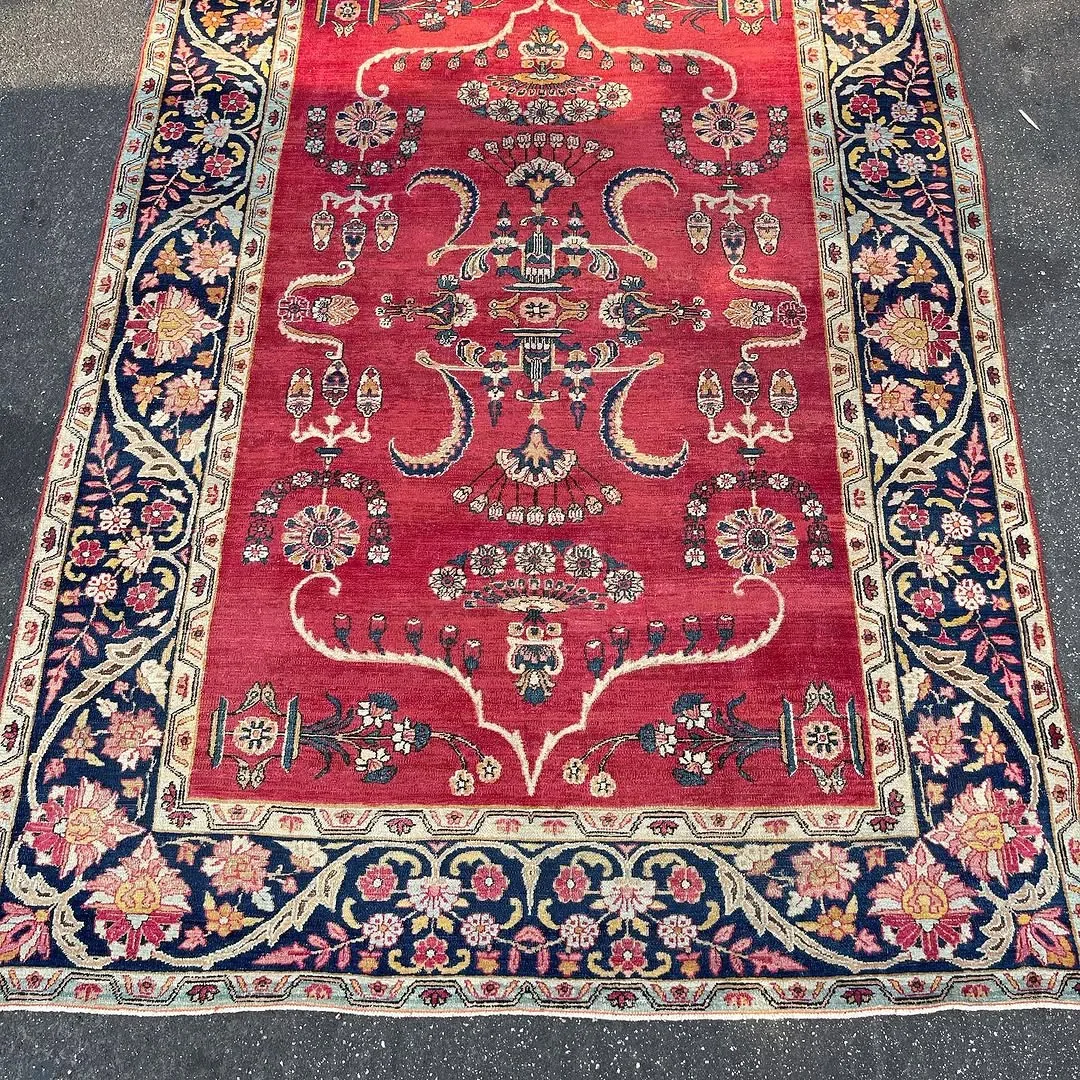
A garden vocabulary drawn from Persian poetry — the upright cypress, and the vase issuing endless flowering stems.
The cypress, traditionally read as eternity; the vase, as life welling up without end.
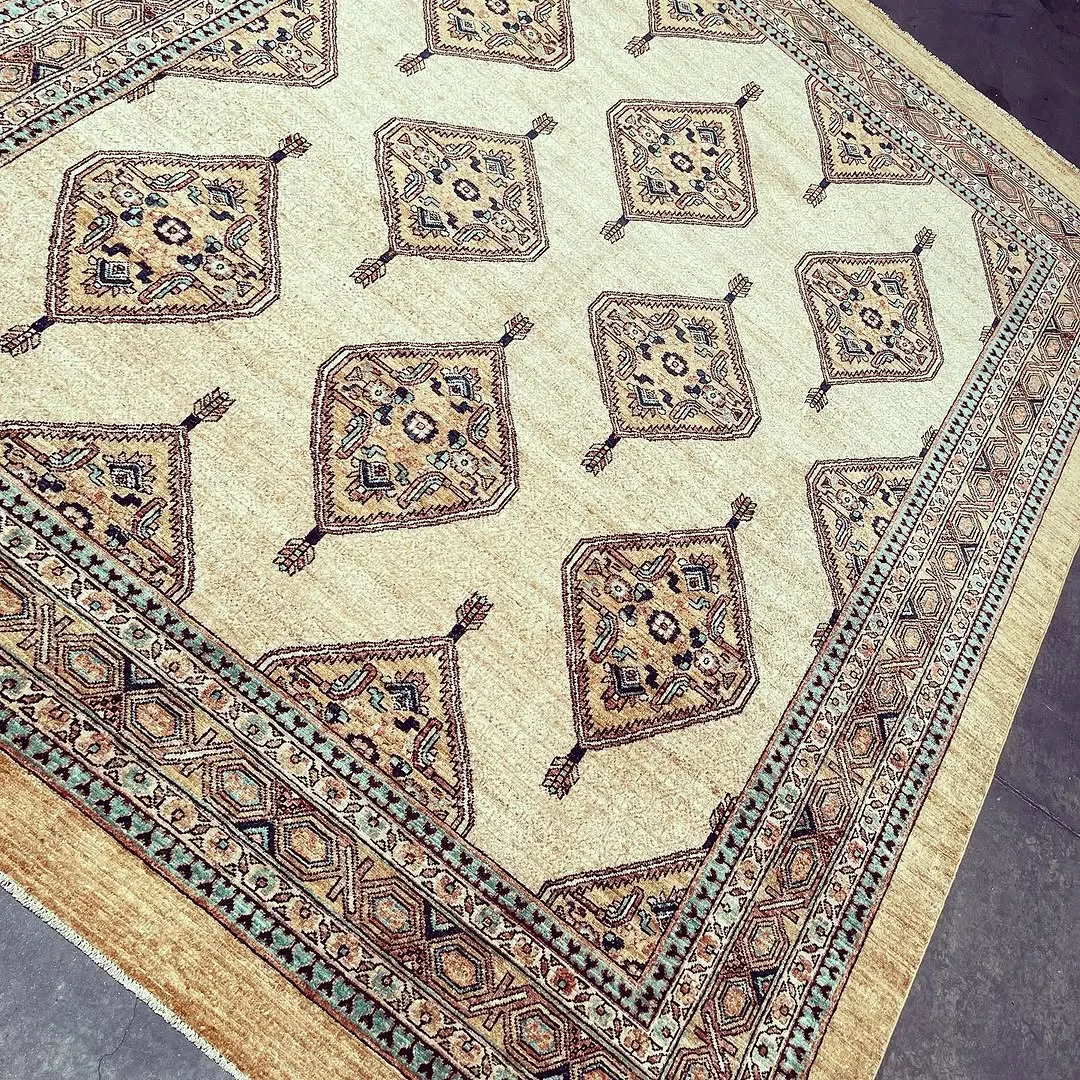
Turkmen steppe weaving — repeating güls, clan emblems carried from loom to loom and marketed through Bukhara.
The gül, traditionally understood as a tribal emblem — order and identity, repeated across the whole field.
Not a thing for a room, but a record — of attention, of devotion, of a tradition five centuries deep. Walk the collection with that in mind.